Skip to content

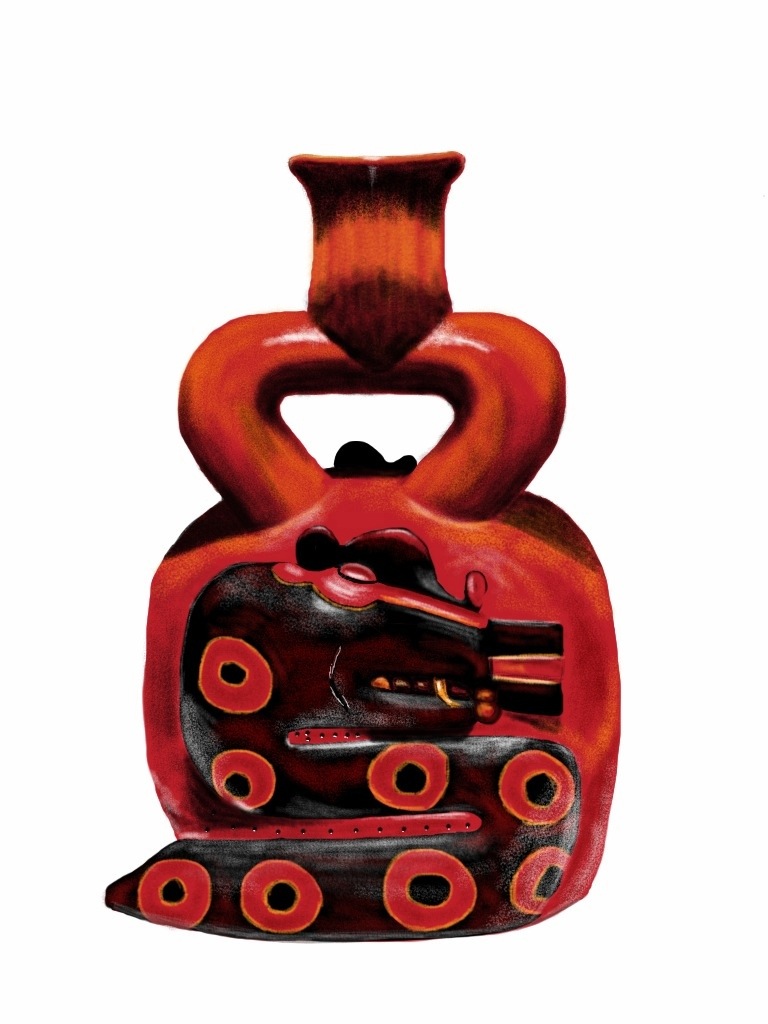
Cuspinique sculpted bottle, c. 1250 BCE – 1 CE
20110609-121402.jpg

Day one hundred and fifty-eight: After sketching a couple of ancient bottles in pencil yesterday, I wanted to try drawing another from the Museo de Arte Precolombino in more detail. This ceramic bottle is notable for the simplification of zoomorphic elements, including concentric circles that represent the snake’s scaly skin. Believe it or not, I painted this picture with only my fingertips on an iPad using a program called SketchBook Pro.

Tagged , ,

ancient modern design

20110607-105040.jpg

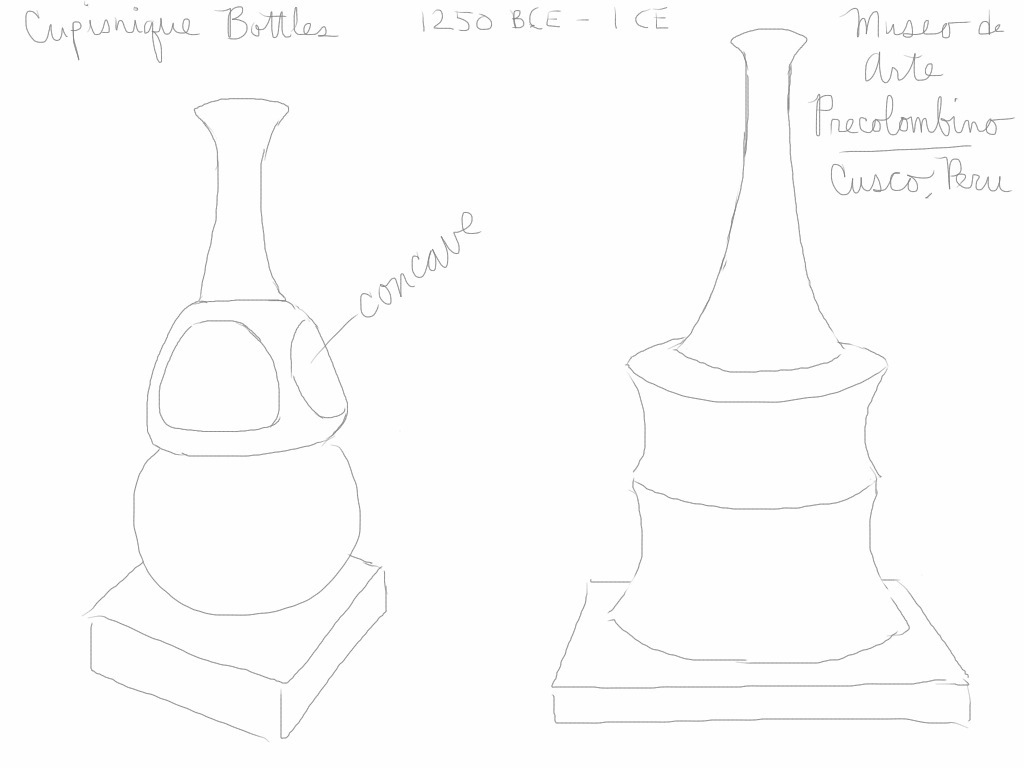
Day one hundred and fifty-seven: When I looked at these bottles this afternoon, I wasn’t sure qwhether I had just walked into a gallery at the Museum of Modern Art in New York or the Museo de Arte Precolombino in Cusco, Peru. Made between 2000-3000 years ago, each bottle demonstrates a remarkable and rare expression of symmetry and line through the careful balance of concave and convex forms. This very quick pencil sketch made with my index finger does not do justice to the true elegance of these treasures from pre-Columbian South America. Ancient modern design, or should I say modern ancient design?

Tagged , , ,

sunrise at Machu Picchu

20110606-112842.jpg

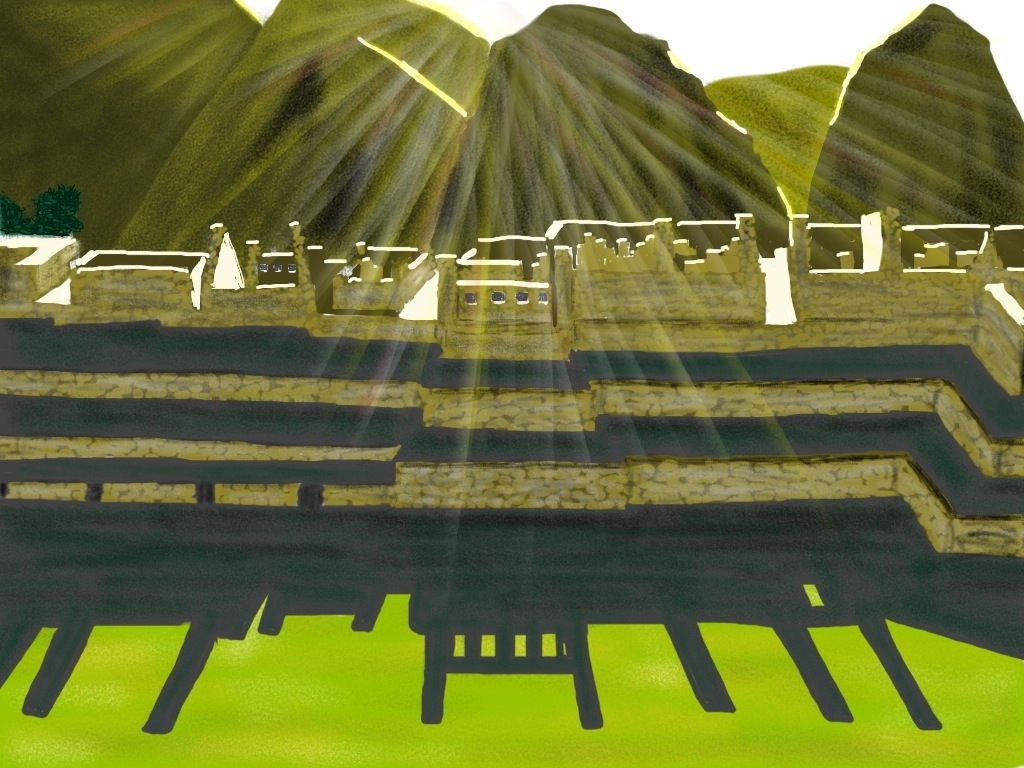
Day one hundred and fifty-six: Watching the sun break over the mountains and illuminate the Inca city of Machu Picchu is a spectacular experience. After checking in at the sun temple to confirm that it is not quite the winter solstice, I took this photo of the eastern ruins casting shadows across the grassy central plaza. It was easy to sketch the basic composition of the scene in pencil, but I spent most of the train ride to Cusco painting in the details. Adding in the multi-colored ens flare was a fun, last effect. This was certainly a dawn to contemplate and remember.

Tagged , , ,

view from Waynapicchu

20110606-111433.jpg

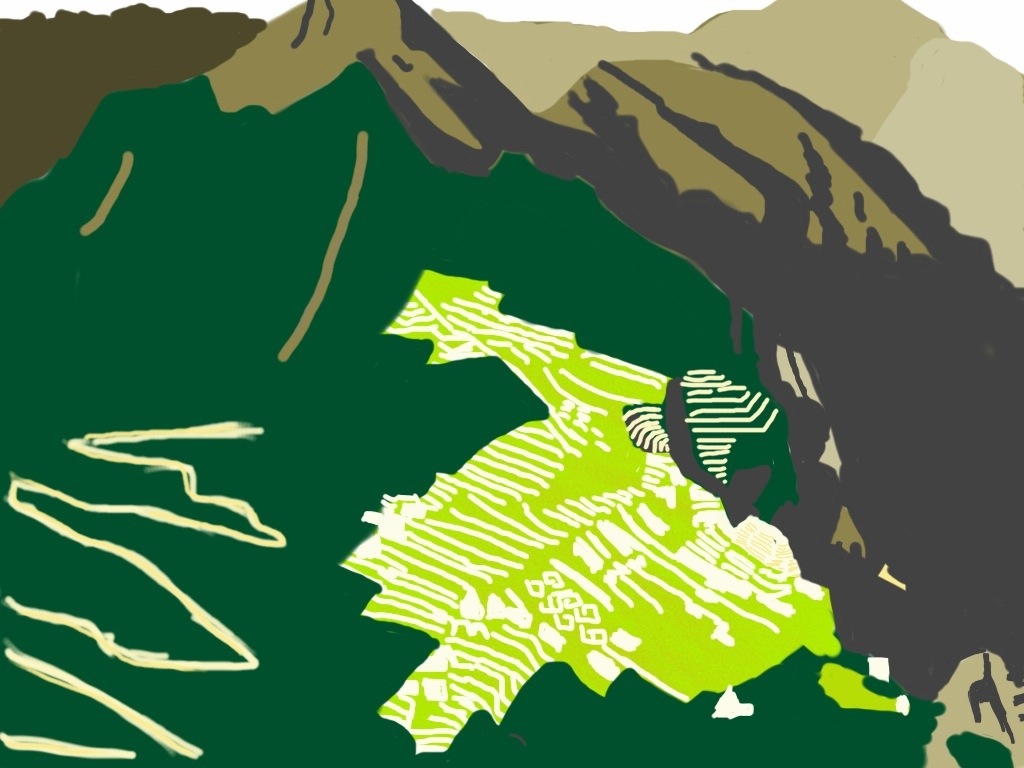
Day one hundred and fifty-five: After hiking straight up about 941 feet via a steep and twisting series of stone steps, squeezing through a narrow tunnel, and tentatively perching myself on the the knife-shaped summit of Waynapicchu Moutain (altitude 8,924 feet), I snapped an aerial view photo of the Machu Picchu complex below. I had hoped my sketch based on the pic would be more complete than the color-by-numbers version here, but after descending Waynapicchu, and then climbing to Intipunku (the sungate, at an elevation higher than Waynapicchu), down again, and then climbing higher still to the summit of Machu Picchu Moutain (about 2,027 feet above the ruins to an altitude of 10,009 feet), I was too exhausted to add any more detail to this drawing. Needless to say, the views along the ways and at the tops were spectacular, and worth all the work and nerve it took to see them.

Tagged , , ,

sundial at Machu Picchu

20110606-111133.jpg

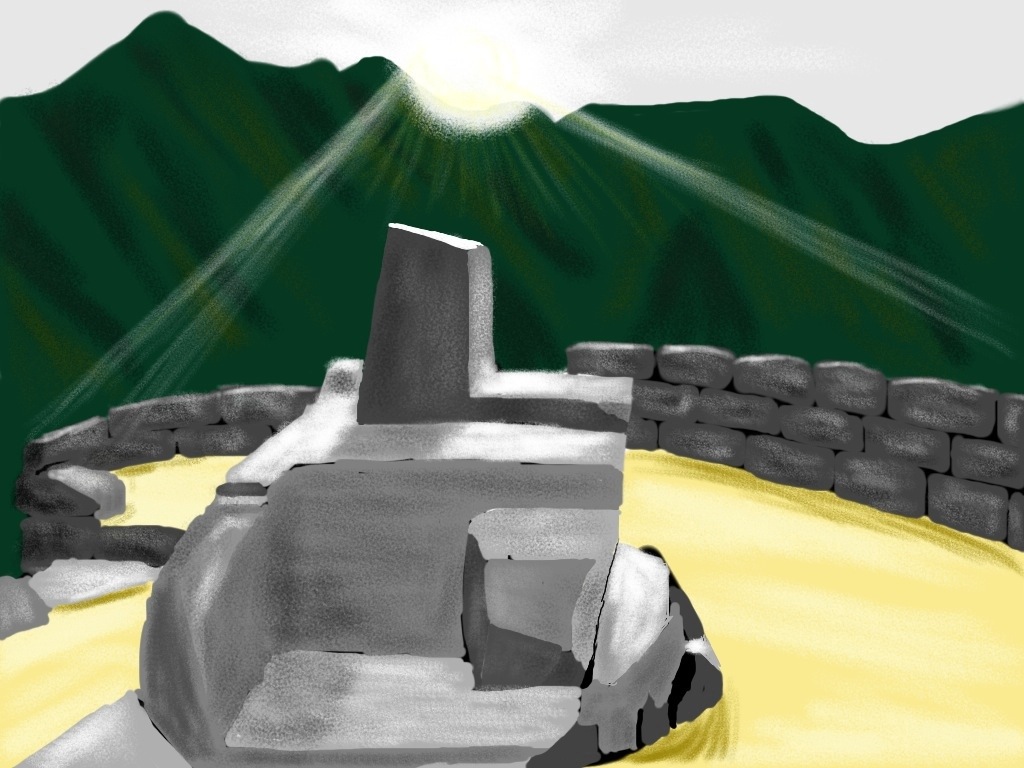
Day one hundred and fifty-four: Despite gray skies this afternoon, the sun burned through the haze just enough to cast a shadow on the sundial at Machu Picchu. This drawing is based on a photo I snapped with my iPhone just before sunset. The complex geometry of the sundial appears to have been carved out of a single megalithic stone.

Tagged , ,

plein aire sun temple

20110603-052642.jpg

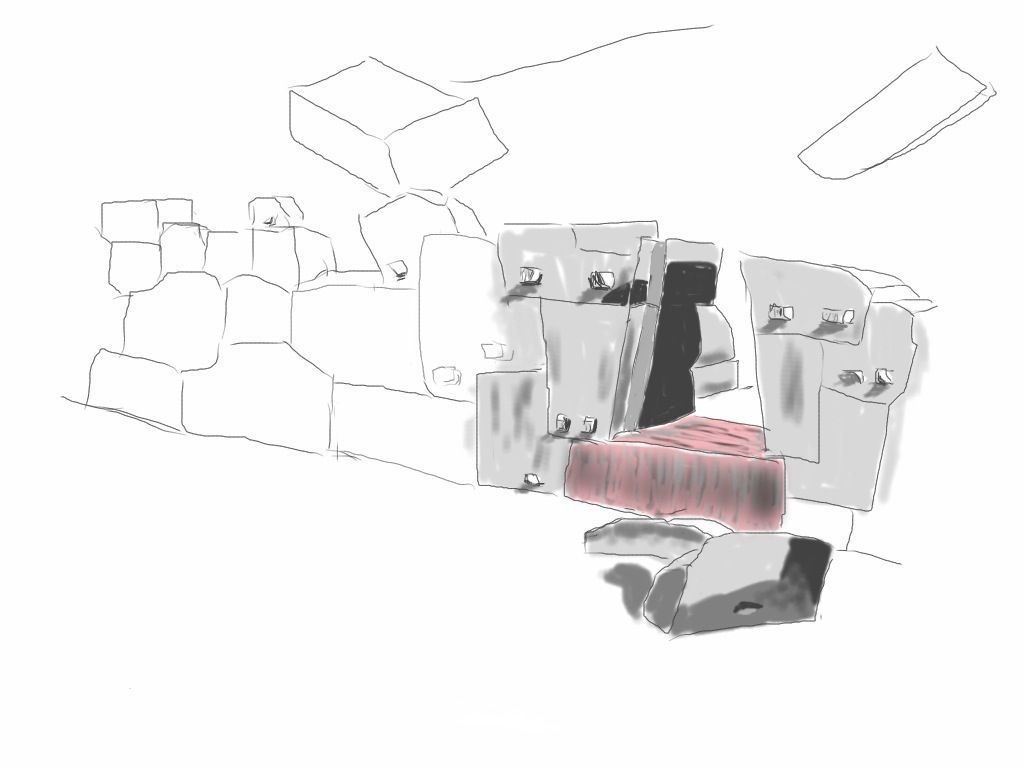
Day one hundred and fifty-three: This afternoon I took the iPad to the Ollantaytambo sun temple and started looking for something I thought I could draw relatively quickly. I ended up sitting on a terrace across from my favorite wall in the complex, which as far as I can tell, faces the rising sun of the winter solstice (less than 20 days from today in the southern hemisphere). Since I usually draw from a camera snapshot, my on-the-spot sketch was a challenge: the sun kept changing and thus so did the shadows. By the time I finished my session, the shadows in the doorway — the original entrance to the sun temple — had completely changed. My favorite part of the wall are the bumps purposefully left during the carving of the giant stones. At times they cast long shadows across the wall, but I included shorter shadows here. The smooth stones are all different shapes, and carved to fit together perfectly. Amazing!!

Tagged ,

Inca ruins in a landscape

20110602-013759.jpg

Day one hundred and fifty-two: I started this sketch after breakfast and came back to it a few times between bartering in the market. It’s based on my favorite photo from my hike in the Pisac archeological park yesterday. The guidebook suggests that the Incas were masters at integrating architecture into the mountainous landscape, and I’m inclined to agree. The colors are not nearly as subtle and gorgeous as the real thing, but I am limited in my choice of colors and to what I can muster from my fingertips. I would have liked to work on it more, but I figured I’d better post now while I have Internet access. Next stop: Ollantaytambo. If I don’t post within the next two days, it means I’m off the grid!

Tagged

Pisac textile market stall

20110601-052426.jpg

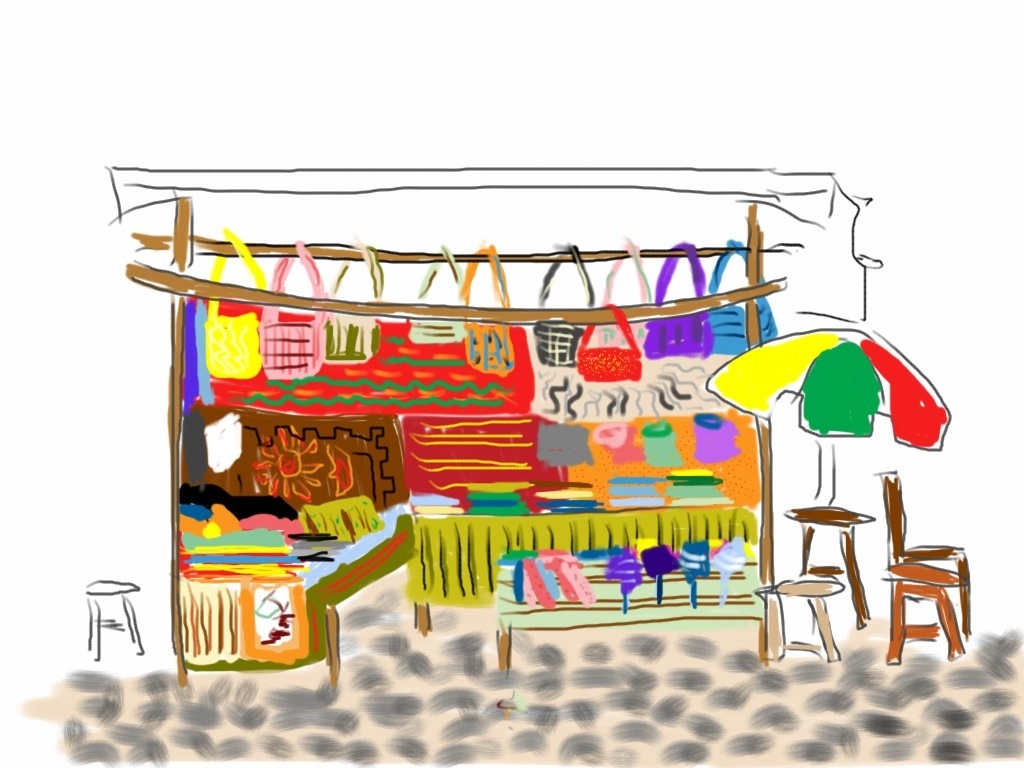
Day one hundred and fifty-one: The central square of the Andean mountain town of Pisac is filled with stalls selling everything from carved gourds to ceramic bowls to tapestries and cloths of all kinds. This study of the stall across the street from the hotel does not do the actual colors and patterns of the handwoven goods a bit of justice. Yet the sketch is what I could muster from my fingertip on an iPad, and reminds me a bit of early 20th-century modern paintings.

Tagged

arm and shoulder

20110531-025501.jpg

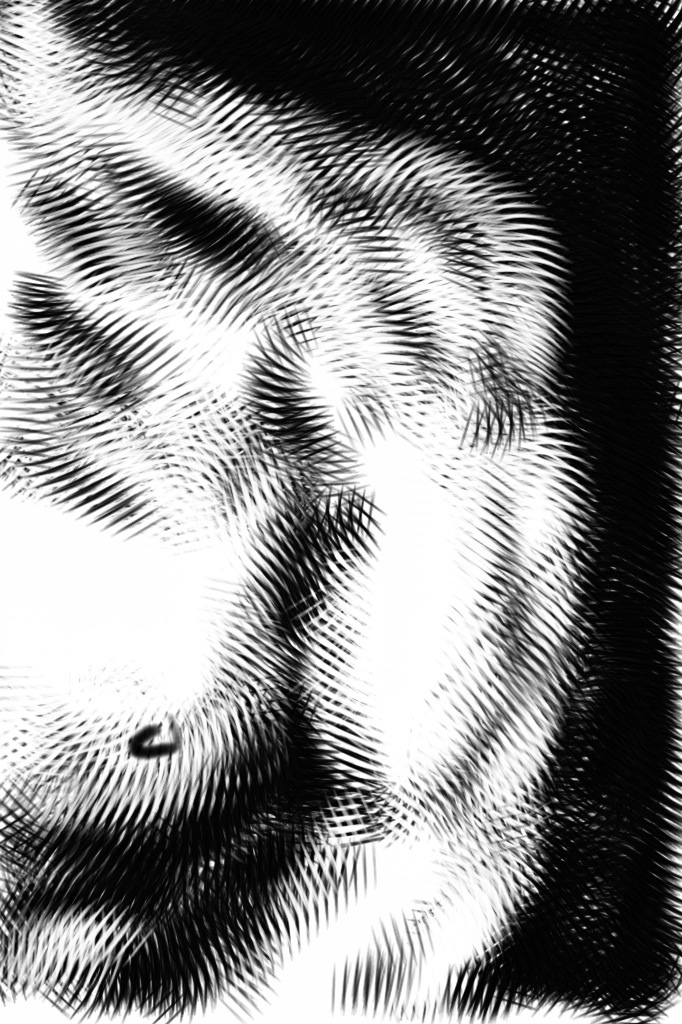
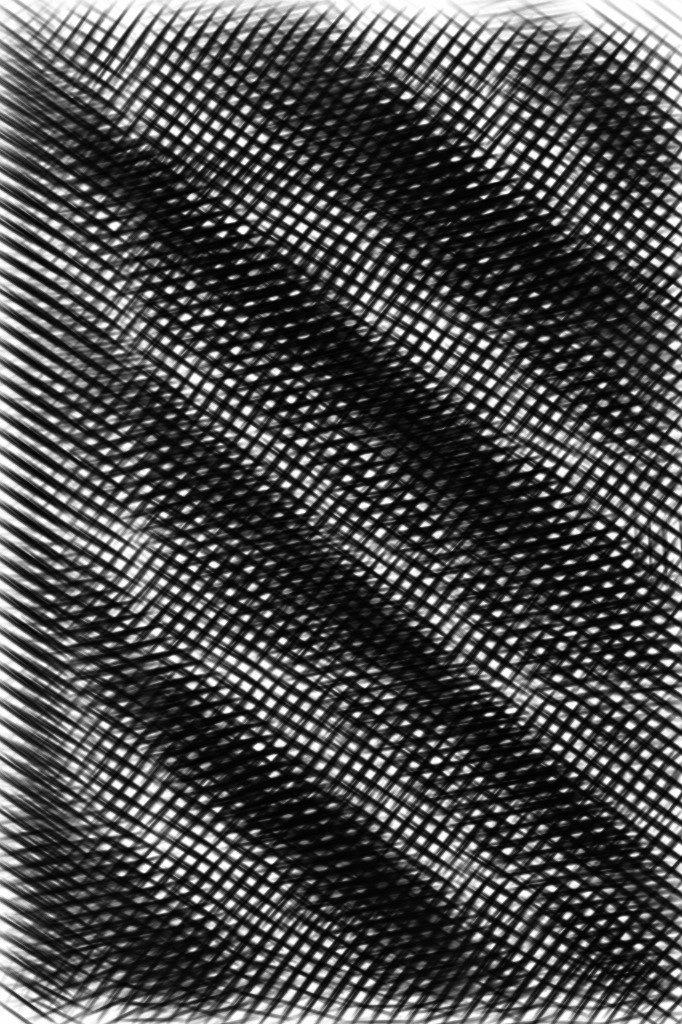
Day one hundred and fifty-one: While doodling on Sketchbook Pro for the iPhone, I discovered a “brush” that imitates a series of engraved lines with every finger-stroke. So I started experimenting to see if I could create shapes with cross-hatching similar to those in 16th-century engraved copperplate prints. Most remarkable, I think, is the way old masters like Hendrik Goltzius used tapered engraved lines to model musculature and drapery. The sketch you see here is my attempt to manipulate line direction and density to form a man’s shoulder and arms. While it lacks the precision of a late 16th-century Dutch engraver, I’m impressed by the digital tool’s response to my fingertip, and just how effective tapered hatch marks are for shading forms. The wrinkles in the image below are the result of my first practice at, in the words of Leon Battista Alberti: “lines [that] stick together like close threads in a cloth [to] make a surface.” (“On Painting,” c. 1436.)

20110531-025931.jpg

Tagged

jet

20110530-040112.jpg

Day one hundred and fifty: With touchdown in Lima at 11:30 PM, I realized in the Atlanta airport that this would be my last chance to post a drawing today. I used a new (to me) application for the iPad called Sketchbook. It has a lot of different brushes and effects (but no blender tools!), all of which seem promising, but so far are simply annoying because I don’t know how to use them to achieve a particular result. There is an art theory that a medium dictates it’s own style to some extent, and I suspect the same is true with digital painting programs. Especially ones with limited function and crafty effects. This sketch of a jet outside the window experiments with Sketchbook, and is a re-awakening of my rusty finger painting skills (expectations?) that I’m sure will grow over the next 10 days. Here’s to a jetset wifi digital world!

Tagged